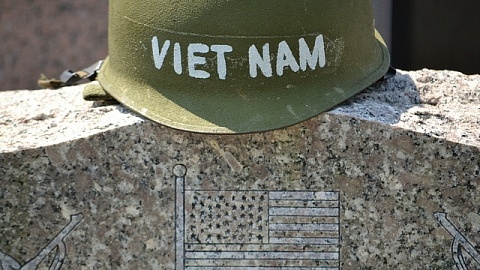
In his new book, American Reckoning: The Vietnam War and our National Identity, UMass historian Christian Appy argues that a false sense of 'American...



A new book by Jens David Ohlin of Cornell University, The Assault on International Law (Oxford), presents a scathing critique of the Bush-era international legal team who maintained that the United States is not beholden to any international legal obligations. Ohlin, by contrast, argues that nations should obey international law out of their rational self interest.
 You write that international law is under attack in this country. Who is it under attack from - just a few conservative skeptical law professors in the ivory tower or is it more systematic and widespread?
It is indeed more systematic and widespread and flows from multiple sources. There are deep historical roots for American exceptionalism, isolationism, and skepticism towards international law. In the book I focus on one particular source: intellectual arguments that the US should ignore international law because it is non-binding, not real law, or not enforceable in federal courts. These arguments make it easier for politicians to ignore international law because they reduce the costs of non-compliance.
But there is a lot of skepticism here, it seems almost baked into our system, at least with respects to refusing to ratify seemingly innocuous international treaties on things on like the rights of the disabled, or child soldiers, or freedom of the seas. If conservatives believe that international law is meaningless, why are they so against ratifying such treaties? Also, is it just simply a deep-seated worry of letting foreign law supersede domestic law, or is it rooted in some abstract desire for greater autonomy, which some Americans worry is slipping?
A common charge against academics is that they have no power or influence over policy or legal decisions. But your book paints a different picture, one of at least legal professors having too much power. Is that the case?
I deliberately used the term “New Realist” to show that these scholars have some intellectual debt to the thinkers that political scientists call “classical realists” and “neo-realists” — both of whom studied power politics in international relations. But they take the arguments to the next level by explicitly arguing that states have a moral duty to defect from customary international law when it becomes inconvenient for the state. I think this approach is wrongheaded, not just intellectually but strategically as well. In our age, successful war is now a multinational effort — going it alone just doesn’t work anymore.
The Senate has an important role to play in international law, not just for giving advice and consent on treaties but also lots of areas where the Constitution gives the legislative branch an important role. That includes declaring war, the Define and Punish Clause, and lots of other provisions. But yes, historically the Executive Branch has been in charge of diplomacy, and there is good reason for that. It is a bit chaotic to have our diplomatic posture pushing and pulling in multiple directions at once — not a good idea.
You argue for states and their leaders to adapt a more expansive notion of rational self-interest. What do you mean by this?
I argue for a planning theory of rational agency. The old way of thinking about rationality is to play your best response at each moment in time. I think that’s wrong. I think a rational agent should act in accordance with a plan that makes the agent’s life go better over all. If the individual action is part of that rationally justified plan, you should follow through on it. That’s why it is sometimes rational to do something that, in the immediate moment, “seems” to be to your disadvantage. The advantage comes because the action is part of an overall plan that is beneficial. I think legal constraints often work this way. You should comply with the law even if ignoring it might have some tempting benefits right now. Why? Because complying with the law is one part of an overall plan that makes the agent’s life go better.
 Jens David Ohlin is Professor of Law at Cornell Law School, co-author of Defending Humanity (Oxford), and co-editor of Targeted Killings (Oxford).


In his new book, American Reckoning: The Vietnam War and our National Identity, UMass historian Christian Appy argues that a false sense of 'American...

Bridget Coggins on her new book, Power Politics and State Formation in the Twentieth Century, on how states come to be in the modern world.

Nicolaus Mills on his book, Every Army Man is With You, and the story of the 1964 Army football team that defeated Navy, but went on to fight less certain and...


