

"Laws are silent in times of war."
Latest:   

Time to Partner with Iran

March 9, 2015 at 5:00 am  •  4 Comments

By

I have attended and graduated from several “elite” military schools and colleges where I and other senior military officers debated ad nauseum what America’s national security policy and strategy should be. When these same “elite” military school graduates returned to today’s battlefields, however, their mindset was still to fight WWII or Vietnam again. We should put away the bayonets. There will never be another Normandy-style invasion operation or any massed force-on-force battlefield face-off. The last “real” conventional war was fought 70 years ago. Since then, we have been embroiled in various types and levels of conflict, none of which could be labeled “conventional.” Like it or not, “small ball” warfare will be the order of the day for the United States going forward. Recognition of this state of affairs requires development of a new American strategy for the Middle East. We need to take a long view that accepts the region for what it is, while understanding what our main strategic objective in the Middle East is: ensuring the free flow of commerce. To do this requires protecting the key chokepoints of trade, which in turn requires allying with the two biggest players in the region: Israel and Iran.

While America struggles with how to apply its technological edge and preponderance of force, terrorist organizations continue to use their own battle-proven tactics of “strike, retreat, hide, re-group, and re-strike.” And, it appears, we will continue to use our “whack-a-mole” tactics. The result will be more loss of U.S. blood and treasure, and a never-ending struggle just to play defense. President Obama’s strategy of “degrading and ultimately destroying ISIS” without ground troops is offensive to anyone who knows the slightest bit about military strategy. M1-A1 Abrams tanks, F-22s, and space-based weapons do not work against an adversary who uses a low-tech mix of garage door openers, Twitter, iPhones, and suicide bombers while mixing among the population. To demonstrate how far off our thinking is, the U.S. Air Force is trying to deactivate the A-10 — the only aircraft in the inventory that could truly be effective in that environment of light air defense. Instead of using the existing A-10 for close air support, the military “experts” want to use the F-35 and B-1 bombers. Their reasoning is that the F-35 and B-1 allows us to fight both our current and possible future state foes in a conventional conflict. This shows their preference for fighting yesterday’s conventional wars tomorrow at the cost of combat effectiveness today.

ISIS, the Taliban, and Al-Qaeda have a strategy – there for all of us to read out of Mao’s “little red book.” It instructs the asymmetric warrior to avoid strength, retreat if temporarily defeated, re-group, and strike again at a time and place of their choosing. In the meantime, they should inflict terror and fear wherever possible among the populace, both home and abroad. Beheadings, crucifixions, raping, and suicide bombings are good examples of low cost and low risk tactics used by terrorists to attack their foes.

President Obama’s strategy of “degrading and ultimately destroying ISIS” without ground troops is offensive to anyone who knows the slightest bit about military strategy.

Using volunteer suicide bombers is an interesting and potent tactic and one that is central to our misunderstanding of the Middle East. If someone is willing to give up their life for a cause or strategy, it is argued that it means one of two things. First, they believe in what they are doing and are willing to voluntarily die to support it. Second, someone has put enough fear into them that they are forced to do it. I submit that it is the former that is more important to understand. They believe in what they are doing. For military purposes, it is not important why they believe it; it is only important to accept that they do, and are willing to die for it. We need to understand and accept that. Leave explanations of why to social scientists.

In Godfather II, Michael Corleone visits Cuba prior to Castro’s takeover and is trying to decide whether to invest in operations there. When he is riding back to his hotel in a limo, he witnesses a suicide bombing attack against Batista’s police by a Castro supporter. Later, he explains that when he saw that, he knew that Batista had no chance against people who were willing to forfeit their life for a cause they believe in. He never invested in Cuba.

In the U.S., we think in four-year presidential cycles, or even in shorter two-year midterms. The current president inherits the consequences of the last president’s Middle East policy, as between Presidents Bush and Obama. Each Commander in Chief hands over a “bucket of worms” to the next, who then in turn tries to regroup, re-organize, and move forward with a new plan or a new mandate. The result is always the same: more blood and treasure spent in the short-term while the enemy moves forward with their long-term strategy. It does not make any difference if we have a Democratic or Republican President, the result is always the same. We achieve some measure of limited success in the short term, but defeat in both the long term and big picture, and soul searching as to what went wrong. Then we take up again the inevitable search for the guilty and then re-emergence with the same basic strategy with a new name — “Peace with Honor”, “Vietnamization”, “Nation-Building”, “Seize and Hold”, “Search and Destroy”, “Surge”, and on and on.

Vietnam is a good example of American short-term thinking. Ho Chi Minh said that he would out-wait America. Operation Linebacker II inflicted unparalleled damage on North Vietnam. Again, the North Vietnamese strategy was to retreat to the peace table, sign or do whatever was necessary to extend the timeline, creating a strategic pause to regroup, wait for the right time, and then storm across the border and take over the country. It is classic Mao. He was willing to wait a hundred years to make Vietnam one country. We wanted out as soon as possible. Johnson opted out of a second term, and Nixon just wanted it over. All of Kissinger’s secret negotiations, shuttle diplomacy, and the associated drama surrounding it played right into the North Vietnamese hands and only delayed the inevitable. It gave them time to re-group and let their strategy play out. Ultimately the unfortunate bottom line of the Vietnam War was the helicopter scene on the top of the U.S. embassy in Saigon on April 30, 1975. We left, they prevailed, and their long-term strategy unified their country.

In the Middle East and elsewhere outside America and the West, time is measured in much wider increments, often in terms of decades or centuries. As with Vietnamese communists, ISIS has a long-term strategy. As Kate Brannan wrote in Foreign Policy magazine when describing the indoctrination of young ISIS soldiers:

They stand in the front row at public beheadings and crucifixions held in Raqqa, the Islamic State’s stronghold in Syria. They’re used for blood transfusions when Islamic State fighters are injured. They are paid to inform on people who are disloyal or speak out against the Islamic State. They are trained to become suicide bombers. They are children as young as 6 years old, and they are being transformed into the Islamic State’s soldiers of the future.

This is but one example. ISIS, al-Qaeda, and the Taliban are in this conflict for the long haul. The United States needs to think in decades and centuries, and stop thinking in short-term, four-year presidential cycles.

Clausewitz’s “center of gravity” outlined in his famous work, On War, depending on who you read, has different meanings to different people. I think about it as: What makes the adversary tick? What are the one or more things that you can attack or exploit that will inflict potentially fatal damage to their strategy and possibly affect the outcome of the conflict? As far as Islamic extremists’ centers of gravity, I believe there are two major points. First, there is the Sunni/Shia schism and hatred of one another. Second, there is the lack of a strong, unifying leader with a single “Muslim Vision,” not just a Sunni or Shia vision. We can use both of those vulnerabilities to our advantage. Based on documented history and the current state of affairs in the Middle East, it is reasonable to assume that we are not going to force our will, culture, or form of government on anyone there. We have tried that for almost 25 years and it has not worked. We have to accept that.

To Defeat ISIS, Know Thyself

It is also important to know our own centers of gravity, not just the enemy’s. In the U.S. case, we have several centers of gravity. First, as discussed, the trap of American impatience and short-term thinking. Second, there is our national leadership’s reaction to negative media and public opinion. And, third, the negative effect of America’s current state of systemic political dysfunction. It is certainly not the quality of our military or our equipment. It might be the quality or timidity of our senior military “leaders,” but not the military itself. At the unit level, our military is still arguably the best trained, equipped, and led armed forces in the world.

ISIS, the Taliban, and al-Qaeda are targeting each of our centers of gravity. One glaring example was in the summer of 2014, at a time when ISIS was initially overrunning Iraq, our Congress went on a 12-week campaign break. Their timing was impeccable and our leaders’ conduct was unconscionable. At a time when we needed a national debate on how to deal with ISIS, the politicians were out telling campaign lies about each other. Meanwhile, ISIS capitalized on our dysfunction and indecision and continued to strengthen and absorb more territory.

Sun Tzu wrote in The Art of War that “all warfare is based on deception.” In direct conflict with this maxim, President Obama has concocted, with the aid of his military leaders, a half-baked strategy to “degrade and ultimately destroy ISIS” by using airpower alone. He then proceeded to announce his plan to the world — and to ISIS — in a press conference, and later in a CENTCOM briefing regarding the strategy and timing of the offensive to retake Mosul.

There is no hint of deception, ruse, slight-of-hand tactics, or exceptional thinking in the current U.S. strategy against ISIS. I see a flawed strategy based on naiveté and a determination to avoid a ground war at any cost. Americans are tired of war and, after 25 years, it is understandable. Another ground war in the Middle East is not palatable. But, if a nation makes the decision to employ its armed forces — which we have done — it must do so with all its might and furor. Our current strategy is only going to get more troops and civilians killed with no appreciable degradation to ISIS.

For us to think that airpower alone is going to destroy ISIS is delusional at best. Without a ground campaign, we are just chasing ghosts, helping the ISIS recruiting program, killing innocent civilians, and providing the backdrop for more of our young warriors to get killed when troops are eventually employed (which they will be). Our strategy reminds me of the film Rocky, where Sylvester Stallone is chasing the elusive chicken without much success. Think of chasing 100 chickens and trying to catch them. That is essentially what we are doing in our efforts to “degrade and destroy” ISIS. We are chasing chickens.

It’s About Commerce

The 19th century English statesman, Lord Palmerston, said that “We have no eternal allies, and we have no perpetual enemies. Our interests are eternal and perpetual, and those interests it is our duty to follow.” The U.S.’s “permanent” national interests in the Middle East are to ensure the free flow of commerce through the Suez Canal, the Horn of Africa, and the Strait of Hormuz. To say we have “humanitarian” interests in that part of the world is condescending, misleading, and deceitful. There are dozens of other places around the globe that suffer from worse humanitarian problems.

Let’s be honest; we care about the Middle East because of economic interests, not because of the people’s oppression. People have been oppressed all over the world for millennia. The question is: do we want Americans to die to alleviate their oppression? That is not to say we should not care about their plight; we should. It is just stating the fact that our national interests are not at stake. Are we going to have Americans die to stop Boko Haram in Nigeria from kidnapping school kids? Are we going to go to war with Russia over their aggression in Crimea or the Ukraine? Are we going to get between China and Japan over island disputes? I think not. Although these are real problems, we will not, and should not, commit American troops to solve other nation’s problems unless they endanger our national interests. The world is a dangerous place, with real evil contained therein, but the U.S. cannot be the savior for all things wrong, horrendous, and unfair in the world.

Regarding the protection of our national interests in the Middle East, Israel and Egypt provide our leverage over control of the Suez Canal. We pay both countries each year not to kill each other, and our relationships with Egypt and Israel, although chilly, are workable because they both need us. In order to manage the Horn of Africa, we need influence in Somalia, Djibouti, and Yemen, with collateral influence in Ethiopia, Saudi Arabia, and Kenya. Finally, the Strait of Hormuz, one of the key global chokepoints, is vital to the world’s commercial interests. 30% of all seaborne-traded oil passes through there on the way to the Indian Ocean and on to Asia. The U.S. is now the world’s leading oil and natural gas producer, having surpassed Russia and Saudi Arabia in 2014. Oil from the Middle East is not as vital to the U.S. as it once was, but the rest of the world and its stability depend on the oil that passes through the Strait of Hormuz. Iran, the United Arab Emirates, and Oman are key players there. All of these vital geographic points are where we need to exert our influence instead of spending our time, blood, and treasure on the vague concepts of “nation-building,” or “exporting democracy.”

To do this will require new, longer-term strategic thinking that radically differs from that offered by the usual “talking heads.” The first step would be — rather than continuing to alienate them — build a political alliance with Iran and support them as our catalyst in the Middle East. That’s right, Iran.

A political alliance with Iran, along with Israel, can almost guarantee continuous American influence in that part of the world for the next hundred years, at least. To many, this is both heresy and a ridiculous idea because Israel and Iran are bitter enemies. I disagree; they may be enemies on the surface, but they need each other as enemies to sustain their military and political power. They do not need to go to war against each other; they just need to have one another as an enemy to rail against. Greece had Sparta, the Yorks had the Lancasters, the U.S. had the Soviet Union, and Batman had the “Joker.” It is good politics to have an enemy, real or imagined.

I am taking the “long view.” What does America want its influence in the Middle East to be 100 years from now? In 200 years? In 500 years? Not this week, month, year, or upcoming presidential cycle. To only plan for the present and defensively jumping from crisis to crisis is not only shortsighted, but playing into the extremists’ hands.

This strategy is neither a humanitarian one, nor one that abides by any moral, ethical, or chivalrous code of war. It deals with the Middle East as it is, not as a utopian dream of some starry-eyed doctoral candidate tucked away in an Ivy League academic sanctuary. It is Realism or Realpolitik.

According to the Pew Research Center’s October 2009 Report: “Of the total Muslim population, 10-13% are Shia Muslims, and 87-90% are Sunni Muslims. Most Shias (between 68% and 80%) live in just four countries: Iran, Pakistan, India and Iraq.”

The Middle East is controlled by kings, princes, dictators, despots, religious zealots, crooks, and thugs. Those are the facts. We can continue to try to change it to our liking, or we can deal with it as it is.

Divide and Conquer

As discussed, one of the terrorists’ centers of gravity is the Sunni/Shia split and their hatred of each other, manifested throughout the millennia by slaughter and political maneuvering for control of the world’s Muslim population. It is reasonable to assume that after almost 1400 years, their mindset is not going to be altered anytime soon. It is in the U.S. national interest to have the Muslim world continue that sectarian split and hatred of each other.

Since the majority of the world’s Muslims are Sunni, it is important to maintain a strong Shia presence in the Middle East to continue the turmoil. The “Big Shia Dog” in the area where our national interests lie is Iran. Shia make up 89% of Iran’s Muslims and Iran is, arguably, the strongest and most stable military and political power in the region, along with Israel. They are highly educated, technologically competent, possess a strong (although untested) military, and their younger generation has strong leanings toward the west. According to numerous sources (although unconfirmed), we are already collaborating with them in some respects in our efforts to combat ISIS. That is Realpolitik at its most basic level. In the case of ISIS, our national interests align with Iran’s national interests, and therefore we should cooperate to pursue these joint interests. Iran wants to keep Iraq, and ultimately Iran, from being overtaken by ISIS Sunni extremists. We want the Strait of Hormuz open for commerce. Iran is the local controller of the Strait. Therefore we have a legitimate reason for supporting Iran.

Iraq, at the moment, is under Shia control in name only with ISIS possibly closing in on Baghdad. The Baghdad airport is already in rocket range as we speak. Unless the United States deploys ground troops back to Iraq, the siege of Baghdad may become the Dien Bien Phu of Iraq, and may fall within the next year. Likewise, if Afghanistan reverts to Taliban control, which it already is in most of the countryside, Iran will end up with Sunni-dominated extremist countries on either side of it. To Iran, that is a very uncomfortable position to be in, and a potentially fatal threat to their country. In my view, they will fight to keep that from happening.

We need to ensure that Iran remains the strong Shia side of the equation to combat the extremist Sunnis, and thus continue their 1400-year battle for Muslim dominance. Once we throw our considerable political weight behind Iran, America can step back and let the Sunni and the Shia keep one another in check through their eternal armed struggle for domination. In the meantime, the U.S. would not be losing any more blood and treasure in that part of the world and not considered to be supporting Iran’s Shias against the Sunnis.

Instead, in a humanitarian gesture, we are supporting a sovereign victim country or “buffer state” (Iraq) that is being threatened with extinction by extremist ISIS terrorists. By supporting a state, and not a religion, we can stay out of this unsolvable religious-ideological battle, and thus continue to solicit the support of the other nations in the region that are predominantly Sunni.

It is a win-win for the United States. There is continued turmoil in the Middle East, which will keep it preoccupied for decades. In the meantime, our national interests would be preserved. It would also take the United States out of the role of “bad guy” and scapegoat, and it may help reduce the threat of terrorism at home.

Ally With Iran

This strategy is not pretty, but it deals with the Middle East as it is, not as we might wish it to be. Still, it begs the question of what happens if Iran develops a nuclear capability. Is there anyone on the planet who thinks Iran will not get a nuclear weapon in the next decade or two? When — not if — they join the nuclear club, we will have our two strongest allies in the region, Iran and Israel (although they do not admit it), with a nuclear deterrent. I submit that this is a good thing, for it would ensure that the killing will remain at the conventional, sub-nuclear level, with the ever-present threat of the nuclear option as a deterrent. With India, Pakistan, Iran, and Israel with nuclear weapons, religious zealots in that region will continue to kill each other, but at a level that will secure our national interests.

The Middle East is controlled by kings, princes, dictators, despots, religious zealots, crooks, and thugs. Those are the facts. We can continue to try to change it to our liking, or we can deal with it as it is. We have spent trillions of dollars and have had thousands of our young people killed and maimed there in an effort to create change. The Iraqi and Afghan governments and militaries are just as corrupt and weak as they were before we invested our blood and treasure there. To think we are going to change the governing culture in the Middle East is delusional and naive. As long as they are battling one another (not us), and we support Iran and Israel, we will be able to protect our national interests.

A policy of rapprochement and alliance with Iran is not as outlandish as it initially sounds. In 1966, I had two Iranian students in my pilot training class, and we flew against the Iranian F-14s when we deployed to Pakistan from Germany in the late 1970s. There is a precedent, and all things are possible. Of course, that was when the Shah ruled Iran, but what is the difference between a monarchical dictator and a religious dictator? They both rule based on fear and oppression. We will be trading one dictator for another—something we have done before in many places. If it helps us defeat ISIS in the short-term and takes us out of the “whack-a-mole” game in the Middle East for the long-term, then it is a desirable outcome.

Again, this strategy is not moral, ethical, or religious-based, and nor do I pretend that it is. Rather, it is a pragmatic plan for dealing with the Middle East as it is, on our terms, and takes America off of the defensive. It supports the two biggest military players in the region, Iran and Israel, maintains friendly relations with the other regional powers, and secures American national interests. The Suez Canal, the Horn of Africa, and the Strait of Hormuz will be protected and free for hundreds of years. Above all, it pulls us from the trap of short-term thinking and places the U.S. in a position to maintain strong regional influence for the long-term.

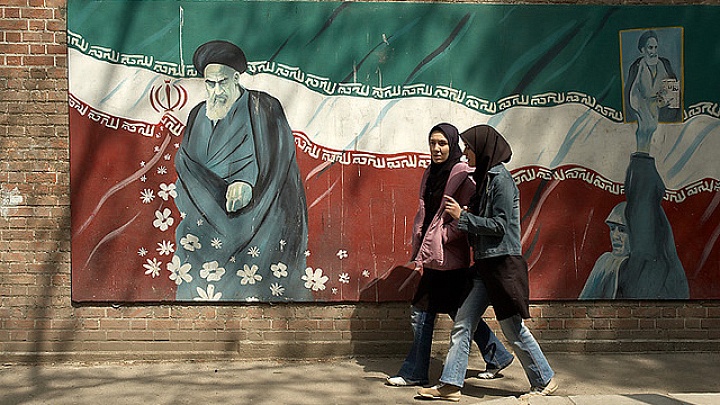
[Photo: Flickr CC: Kamyar Idl]

FacebookTwitterGoogle+Print
About the Author

David Rickert is a retired Air Force fighter pilot who served three combat tours in Vietnam flying the F-4 Phantom, and was a member of the first operational F-15 squadron. He is a graduate of the U.S Army’s Command and General Staff College, the National War College, and has had assignments in both the Departments of Defense and State. He lives in Tucson, AZ, where he owns an editing business, and teaches at the University of Arizona’s Osher Lifelong Learning Institute (OLLI).

4 Comments

  1. Ted Danson / March 9, 2015 at 4:40 pm /Reply

    With all due respect to the good pilot, if you can’t differentiate between the IRGC and the Shah and how they realte to American security, perhaps you shouldn’t be writing on national security issues at all, much less Iran.

  2. Bernie Devine / March 9, 2015 at 4:48 pm /Reply

    Very thought provoking and well worth the read.

  3. Death / March 10, 2015 at 5:02 am /Reply

    Terrible idea. If this is supposed to be about long-term thinking, it makes no sense. Allying with 10-13% of the Muslims against the other 87-90% seems short-sighted. How will Sunnis in Indonesia, Malaysia, and India see us? Given the ease of transportation/communication in today’s globalized world, the idea that we can write off parts of the world is ridiculous. (We don’t need to worry about Japan v China conflict????) Ignoring Iran’s need to have the West as an adversary so it can continue to legitimize its failed Islamist regime seems naive. Trusting the Ayatollahs seems downright stupid. I wonder how much Trita Parsi paid you to write this garbage.

  4. CW4 (ret) Harold North / March 10, 2015 at 4:28 pm /Reply

    Colonel (? I presume) Rickert points out that he is a graduate of the CGSC and the Naval War College, both prestigious institutions, and identifies that their mindset is still set in WW2. He then proposes a wild, arguably fringe, theory for a new Middle East national strategy by allying with Iran. The current fighting in Ukraine is very much conventional-style warfare. It’s still relevant, and will continue to be so. Thus, it is still worthy of continued study, but not at the expense of current and future war strategies, such as drone and cyber warfare.

    While COL Rickert’s theory could be considered revolutionary, I believe it may not be revolutionary enough. Such conventional thinking assumes the U.S. should be interfering in the Mideast in the first place. Perhaps we should consider whether such interference is a sound strategy to begin with. The author is correct that ensuring the free flow of “commerce”, i.e. exporting oil to the West, is our current main strategic objective in the Mideast. However, the real question should be: is it necessary for the U.S.? Wasting more blood and treasure in another military incursion with no real threat to U.S. sovereignty is the ultimate offense.

    I stipulate that the “free flow of commerce” (oil) for the sake of the “rest of the world” is not in the U.S. national interest to the point of committing our troops. However, I believe there is plenty we could do in support of whatever marginal interests we may have in the Mideast. The U.S. is blessed with sufficient oil reserves that, if properly exploited, would last for 100+ years. However, it is the restrictions put in place by our own government that requires oil imports to meet domestic needs. Thus, our dependence on foreign oil is self-imposed. As for the rest of the West, Japan is chomping at the bit to free itself of its military restrictions, so let them secure their own oil—they already buy theirs from Iran anyway, much to our displeasure. Likewise, Europe has been taking advantage of U.S.-provided security for several decades now. If they want oil, let them use their own resources to secure it. Europe has ridden on the backs of the U.S. taxpayers long enough, and now they are beginning to see the consequences of their indifference to their own security, believing that the U.S. would always be there for them. The Europeans are due for a wake-up call, and the bell ringers are warming up.

    President Washington warned us against “entangling alliances”, and our foreign policy is stifled by these self-imposed restrictions. A better strategy would be to remain untangled to be free to make any strategy we see to fit the current situation. This would also serve to keep our potential enemies off-balance, not knowing what we will do next. When necessary, we should adopt the same battle-proven tactics that seem to work so well for our enemies.

    Actually, Muslims do not use Mao’s “little red book” as a basis of their strategy—devout Muslims in fact would consider the use of such a non-Islamic reference as offensive. Their true reference is the Koran and the Hadith, the example set by Muhammad, whose followers engaged in over 80 battles in his lifetime, 27 of which he was present for, and 9 of which he fought in personally, and is considered the “ideal man” (al Insan al-Kamil) for all Muslims to follow (IAW Koran 33:21). This fundamental mischaracterization of Islamic strategy by western analysts is just another blatant example of why we continue to fail to understand Jihadi doctrine. Much more significantly to Muslims, Muhammad said, “War is deceit.”

    While the author is correct to point out the obvious, that Israel and Iran are bitter enemies, there is a fundamental misunderstanding of WHY. In fact, it’s not even addressed, as if it’s not even an issue, or something that can be easily overlooked with the “proper” incentives, presumably U.S. Dollars (which I personally doubt would be seen as an incentive by Iran). As such, there is no theory even presented on HOW such an alliance could even be established, much less maintained. There is NO understanding of the Iranian Mullah mindset and motivations, of Shia Twelver ideology and eschatology, comprehension of Iranian/U.S. history, or understanding of Iranian hatred of both the Great and Little Satans. And with no understanding of these critical principles, there is no strategy resented to overcome them, and thus the author’s entire argument collapses. This is a classic example of mirror-imaging: applying one’s own understandings to another foreign culture, and expecting it to be like ours.

    Actually, allying with Iran doesn’t “deal with the Mideast as it is,” because it fails to address HOW to deal with Iran the way it is to make such a strategy in any way viable. The key word here is “cooperate”, which implies give and take on both sides. Iran has NO intention to cooperate with the Great Satan, and any belief that we may persuade them to, is delusional. To be seen to be cooperating in any real way with the Great Satan would destroy the regime’s credibility (“You know those ‘DEATH TO AMERICA’ chants we’ve been having you yell out every Friday at mosque for the last 35 years? Yeah, we didn’t really mean that.”). In fact, our current military efforts to provide air support to joint Iran/Iraq formations is marginalized, or altogether absent. Their current offensive against Tikrit is taking place wholly without U.S. support. Iran is influencing Iraq that they don’t really need U.S. support, but as long as we are stupid enough to volunteer it, Iraq will continue to take whatever we give, but will offer nothing in return, in an ulterior strategy to “bleed the beast”.
    From a U.S. perspective, both Iraq and Afghanistan are NOT strategically important. If they fall, then Iran will have to deal with them, and they have the power and resources to do so. If the Mideast becomes mired in a Sunni-Shia war, it is in our interest to let them expend their energy against each other, as the author has already pointed out. Iran and Iraq fought each other viciously for eight years during the 1980s, and the rest of the world continued on. We shouldn’t have a dog in that fight.

    I believe there is plenty the U.S. can do covertly or through third parties to influence the Mideast, though. But direct military intervention is a BAD idea. One possibility that the author fails to mention is Iranian regime change. If the U.S. is to realistically ally with Iran, it would require that the mullahs be overthrown, and a more pro-western government take charge. We did it once before, and there have been squandered opportunities since, but it is a strategy still worth considering, if only we had leaders that were serious.

    When Iran does get nukes, it WILL use them on Israel. Tel Aviv will be vaporized, followed by WW3. Iran has no western concept of “deterrence”. This is another fault of mirror-imaging. The author is half-right: the U.S. SHOULD support Israel as much as we can. Israel is the only true democracy in the Mideast, and our only true friend. The Israeli people are determined to defend themselves, whatever the cost, and we should back them up with whatever they may need to survive the coming struggle. I understand that this is a radical departure from conventional thought, but take a serious look where such “conventional” thought has put us in the Mideast the last 25 years.

Leave a Reply