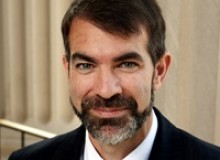
Anjan Sundaram describes the dangers of being a press “stringer” in the Congo, the attraction of Africa and war, and the future of foreign journalism.
Anjan Sundaram on Life as a ‘Stringer’ in the Congo

By The Editors in Interviews No Comments Tags: Africa, Congo, war reporting
Anjan Sundaram describes the dangers of being a press “stringer” in the Congo, the attraction of Africa and war, and the future of foreign journalism.
In her book, Humanity’s Law, NYU’s Ruti Teitel describes a shift in how power operates and is legitimated based on a new discourse of law and legalization.
Former U.S. Air Force strategic planner Eric Jorgensen argues that for the U.S. military, more is not always better, and decisions should be based on what we need, not on what we want.
As Russia rolls out aid convoys and the same R2P rhetoric it did before its 2008 invasion of Georgia, Lionel Beehner warns that the West must be clear in its support for Kiev.
Chris Miller argues that the roots of failure in Afghan nation building lie in an unfinished war and an underestimated will for independence among Afghans — mistakes America has made before.
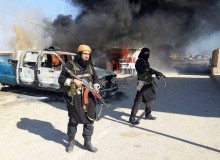
Upon news that the ISIS slayer of James Foley may be a British hip hop DJ, Hisham Aidi writes that European hip hop is not new to jihadism.
Anjan Sundaram describes the dangers of being a press “stringer” in the Congo, the attraction of Africa and war, and the future of foreign journalism.

Kevin Russell writes that Iraq’s leaders, like Lincoln after the American Civil War, will need military progress and de-escalation to create space for political action.

To avoid nuclear proliferation in the region, the United States should stay out of Iraq and let Iran’s proxies and ISIS fight it out, argues Lt Col. Paul Darling.
General (Ret.) Mohammed Al-Samarae, a former Iraqi army commander, analyses a deeply divided Iraqi society and argues the political elite will remain a problem for years to come.
Chad Levinson argues from a rationalist, strategic perspective, Israel’s blockade of Gaza should come down. Moral or not, it does not work.
Nicholas Seeley, author of A Syrian Wedding, discusses life inside Jordan’s largest Syrian refugee camp.
Some military analysts, like James Stavridis, are holding up Colombia as a successful COIN model for the Arab world to emulate. Michael Weintraub points out why they’re wrong.
There are many ways to restructure our armed forces to match current budgetary conditions. Finding the right balance between risks and benefits poses challenges for policymakers, writes Eric Jorgensen.
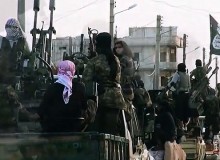
Unlike al-Qaeda, ISIS has a true sanctuary in the heart of the Arab world. That is why the U.S. is right to intervene in Iraq, writes Colonel Clint Hinote.
ISIS has pulled off the impossible: It has gotten Obama to use force after promising to pull us out of Iraq. Lionel Beehner asks: Is that a good thing?
Chris Miller writes that U.S. airstrikes to protect Kurds and Yazidis is the right thing to do, and we have a blueprint from 1991 on how to protect them and repel ISIS.
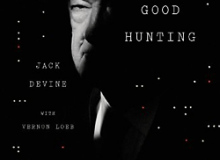
CIA spymaster Jack Devine sets the record straight about the agency’s controversial role during the Cold War in his new memoir, Good Hunting.
In Africa, America is again in search of amorphous monsters to slay. But this GWOT mindset has not made us, or Africans, any safer, writes Thomas Lansner.
To deter China from claiming the Spratleys, as Great Britain discovered with the Falklands, LTC Paul Darling argues we should more robustly arm our Pacific allies.
To reform the Air Force amid budget constraints, it needs to look more like Corporate America. FedEx offers a nice model, writes Eric Jorgensen.
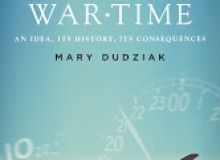
Arnold R. Isaacs reviews Mary L. Dudziak’s new book, War Time, but finds that her misreading of history mars what is otherwise an important book on war.
Kayla Williams talks PTSD/TBI, veterans, and life and recovery in the aftermath of war in her new book, Plenty of Time When We Get Home.
Joshua Rovner of Southern Methodist University talks about his book, Fixing the Facts, on the intelligence-policy relationship and “politicization” of intelligence during the Iraq War and throughout U.S. history.
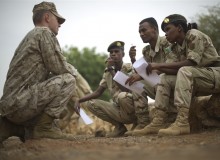
Lieutenant Colonel Paul Darling argues that the U.S. military must rethink its dated benefits system and how it attracts troops and structures their benefits in order to meet the nation’s fiscal challenges today.
CBRN expert Dan Kaszeta argues the terms “Weapons of Mass Destruction” and WMD are undefined, unclear, and unhelpful and should be retired from the lexicon.
WWI and the “July Crisis” of 1914 hold lessons for today’s conflicts in Gaza, Ukraine, and the Middle East, argues Chris Miller.
Russell Crandall talks about COIN and his latest book, America’s Dirty Wars, which explores America’s history of irregular warfare from the American Revolution to the War on Terror.
Lionel Beehner reviews Max Boot’s Invisible Armies and finds the author’s theories explaining insurgents’ recent success to be unconvincing.
As the world finds itself concerned with Russian missiles once again, Chris Miller revisits SNIE 85-3-62, the crucial-and wrong-U.S. intelligence estimate that Nikita Khrushchev would not place nuclear missiles on Cuba.
When it comes to the use of force, America cannot let bad decisions in Iraq stand in the way of decisionmaking in Syria, Ukraine and other conflicts today, especially if it wants to tackle obstacles in the larger strategic environment and pivot to the East.
Ahron Bregman talks about his latest book, Cursed Victory, on the history of conflict in Israel, Palestine, Gaza and the occupied territories, drawing on high-level sources and interviews revealed for the first time.
Chris Miller on the latest German-American spying scandal and why Berlin and Moscow considering going back to paper shuffling and typewriters to counter electronic intelligence gathering may not be as crazy as it sounds.
For today’s superpowers, strength in the art of hybrid warfare is found not on the front lines but on the fringe of international law and the grey regions of international policy, writes Jordan Bravin.
Arnold R. Isaacs reviews I Am The Beggar of the World, a new book of poetry on the war in Afghanistan by ethnic Pashtuns.
Military historian John T. Kuehn looks at what naval warfare ahead of World War I can teach us about avoiding conflict today in places like the South China Sea.
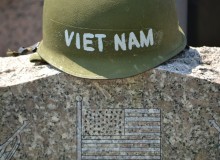
Chris Miller investigates which COIN strategies worked in Vietnam and why, providing valuable lessons for U.S. efforts in Iraq and Afghanistan.
In an interview on his detailed new book, The Sword and the Shield, Kristan Stoddart talks about the U.S., Britain, and NATO nuclear policy and cooperation and how cyberwarfare may be the new Cold War.
Caleb Spencer explores how the wars in Iraq and Afghanistan shaped American Exceptionalism and also Americans’ sense of morality during wartime.
Chemical weapons expert Dan Kaszeta writes that the presence of Hexamine implicates Bashar al-Assad and Syrian government forces in the August 2013 chemical attacks in Ghouta.
Following Edward Snowden’s NSA disclosures and renewed clashes between Washington and Berlin over espionage, Chris Miller discusses Cold War lessons in counterintelligence still applicable to national security challenges today.
Iraqi Kurdistan’s status as a buffer state may be its biggest attribute to eventual statehood, argues Lionel Beehner.
Séverine Autesserre says peacekeepers must reform their ‘everyday practices’ to avoid failure in her new book, Peaceland.
The dominant narrative of the Cold War focuses on the conflict in the West between Washington and Moscow, forgetting about the lessons learned in the “hot” war in Southeast Asia. These lessons are worth another look, argues Chris Miller.
Peter Storey reviews the book, Out of the Mountains: The Coming Age of the Urban Guerilla, by David Kilcullen.
Following a court decision that the Washington Redskins name is a racial slur against Native Americans, some have also taken issue with the U.S. military’s use of Native American names. The military’s use of these names honors their “warrior culture”, argues Chris Miller.
In his provocative new book, War! What is It Good For?, Ian Morris discusses the Hobbesian role of the leviathan in reducing violence and why war is “sometimes good.”
John Wood argues looking at the “criminalization” of IRA terrorist violence during The Troubles may shed new light on COIN tactics in ethnic and sectarian conflicts in the 21st century.
Why do polls show Obama’s approval on foreign policy at record lows? Hint: It’s not because he is a realist, Lionel Beehner explains.
Peter Storey makes the case that the rise and fall of urban warfare studies should not mean we turn away from the literature, especially given that our planet is becoming more urbanized.
U.S. military advisors have a long history of “mission creep.” Don’t be surprised if the ones redeployed to Iraq serve in a combat role against ISIS, writes Chris Miller.
Christopher Coker, author of Can War Be Eliminated?, says we may be ‘sleepwalking’ into another Great Power war.
Chris Miller breaks down two philosophical approaches to intelligence analysis, but finds that the practice is still “informed guesswork.”
Robert Emmet Meagher writes that “just war” doctrine explains our inability to comprehend moral injury and to make sense of our military “heroes” marching off to take their own lives.
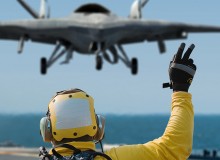
Jacquelyn Schneider and Julia MacDonald list the merits of manned versus unmanned aircraft, or drones, in military effectiveness. Neither is a silver bullet.
As the last of our World War II veterans leave Congress, the risk of losing the memory and lessons learned during a time of unparalleled global warfare is both present and real, argues Jordan Bravin.
Barry Blechman, coauthor of Force Without War, discusses policy options in Ukraine and Syria, civil-military relations, and which president was best at using force abroad.
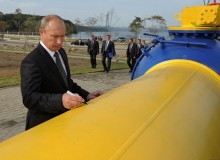
For Russia, energy policy equals foreign policy. But the few pliant friends Russia has, writes Zoran Tihomirovic, could turn their back on Moscow if its energy becomes too expensive, financially or politically.
The second of a two-part feature, Lt. Col. Douglas A. Pryer examines the effects of moral injury on military culture and military suicide.
Lt. Col. Douglas A. Pryer, looking back at classical literature and his own experience in Iraq, makes the case that “moral injury” better explains some psychological symptoms than PTSD. This is the first of a two-part essay.
Mike Matthews writes in a new book that “moral trauma” and PTSD are occupational hazards of combat, but that military personnel tend to be resilient. His research suggests that psychological wounds may be as medal-worthy as physical ones.
Chris Miller argues that it is ironic that the media focused on the military and PTSD aspect of the recent Fort Hood shootings rather than use it as an opportunity to discuss responsible gun laws.